






Hulu
定額で見放題
Nosferatu - Phantom der Nacht
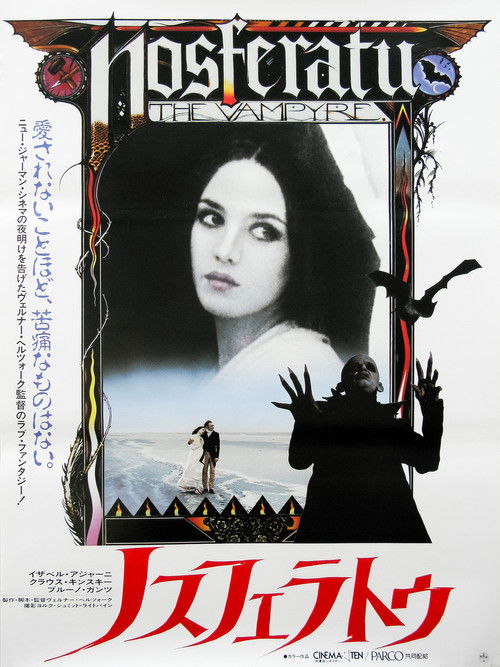
サイレント映画期の名作「吸血鬼ノスフェラトゥ」(1922)をヴェルナー・ヘルツォーク監督がリメイク。ドラキュラ伯爵役クラウス・キンスキーの不気味さとイザベル・アジャーニの透明な美貌が鮮烈。ベルリン国際映画祭美術賞を受賞。 19世紀、ドイツの小都市ヴィスマール。不動産業者ジョナサンは上司からトランシルヴァニアに住むドラキュラ伯爵との不動産取引をするように命じられる。愛する妻を残してトランシルヴァニアに向かうが、途中に立ち寄った村で「ここから先には悪魔が住んでいる。行かない方がいい」と警告される。真夜中にドラキュラ伯爵の城に到着した主人公は伯爵から歓待されるが、伯爵はジョナサンのペンダントの妻の写真に強く興味を頂く。そしてジョナサンの切った指から出た血に吸い付くのだった。無事に契約を済ませるが、ジョナサンが目を覚ますとあらゆる扉には施錠がされていて、城の外に出ることは出来なかった。城の中を探索すると、地下室で棺桶の中で眠る伯爵を発見する。そしてその夜、伯爵は土とネズミを入れた幾つもの棺桶を共に一人ドイツを目指す。その姿を城の中から見たジョナサンは、伯爵が自分の妻を狙っていることを感づく。彼はシーツを結びロープの代わりに城の外に脱出。伯爵を追うのだが・・・
WHERE TO WATCH
※ 配信状況や料金は変更される場合があります。リンク先で最新情報をご確認ください。
YOUR REACTION
ゾクログユーザーのリアクション
OFFICIAL TRAILER
動画提供: YouTube / HD Trailer 3
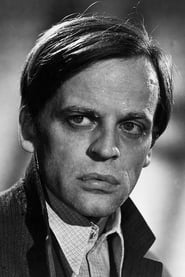
サイレント映画期の名作「吸血鬼ノスフェラトゥ」(1922)をヴェルナー・ヘルツォーク監督がリメイク。ドラキュラ伯爵役クラウス・キンスキーの不気味さとイザベル・アジャーニの透明な美貌が鮮烈。ベルリン国際映画祭美術賞を受賞。
19世紀、ドイツの小都市ヴィスマール。不動産業者ジョナサンは上司からトランシルヴァニアに住むドラキュラ伯爵との不動産取引をするように命じられる。愛する妻を残してトランシルヴァニアに向かうが、途中に立ち寄った村で「ここから先には悪魔が住んでいる。行かない方がいい」と警告される。真夜中にドラキュラ伯爵の城に到着した主人公は伯爵から歓待されるが、伯爵はジョナサンのペンダントの妻の写真に強く興味を頂く。そしてジョナサンの切った指から出た血に吸い付くのだった。無事に契約を済ませるが、ジョナサンが目を覚ますとあらゆる扉には施錠がされていて、城の外に出ることは出来なかった。城の中を探索すると、地下室で棺桶の中で眠る伯爵を発見する。そしてその夜、伯爵は土とネズミを入れた幾つもの棺桶を共に一人ドイツを目指す。その姿を城の中から見たジョナサンは、伯爵が自分の妻を狙っていることを感づく。彼はシーツを結びロープの代わりに城の外に脱出。伯爵を追うのだが・・・
 プロフィールを見る →
 プロフィールを見る →
 プロフィールを見る →
 プロフィールを見る →
 プロフィールを見る →
AUDIENCE REVIEWS
"Harker" (Bruno Ganz) travels to remote Transylvania where he is to help "Count Dracula" (Klaus Kinski) buy a new home in his hometown of Wismar. Why? Well that's because he has fallen in love with a photograph of his beautiful wife "Lucy" (Isabelle Adjani) and has determined to make her his immortal bride. "Harker" had been warned by the locals of the dangers of visiting the "Count" but he pressed on regardless, so ought not to have been surprised when his host absconds from his castle on a schooner laden with coffins, soil and a deadly plague of rats so he can ensnare his innocent young wife. Can he race back home in time to thwart this evil? There's nothing especially new about the chronology of the story here, it's the characterisation of the vampire that helps this stand out. It's obvious from the start that "Dracula" is not of human kind. Contrasting with most interpretations of the title role, Kinski and Warner Herzog attempt to imbue "Dracula" with a degree of humanity. He doles out his lusts left, right and centre upon the innocent, spreading plague and disaster wherever he goes, but he too is cursed. By his own immortality, by his search for some kind of fulfilment or contentedness. This isn't a depiction riddled with sharp teeth and ketchup, it's much more subtle, refined even, telling of a character that it's almost impossible not to feel sorry for. The production itself has dated rather badly, and at times it did remind me of one of these "Sherlock Holmes" remakes, but the thrust of the story is still interestingly different to the normal depiction of this epitome of evil and worth sticking with.
The visuals in Werner Herzog's "Nosferatu the Vampyre" are luscious, hauntingly beautiful in ways that make you wonder: where did Herzog find these set pieces? The plague-ridden streets, the Gothic architecture, the rats flooding through medieval towns—it all feels discovered rather than constructed. This is Herzog's trademark style at its finest. You never feel like you're watching a movie. Instead, you're observing a documentary about a particular vampire, as though this is simply everyday experience captured on film.
Klaus Kinski's interpretation is 180 degrees from Bram Stoker's Dracula. He plays the count not as aristocratic predator but as a pathetic, misunderstood child: lonely, cursed, suffering his immortality. It's a brilliant tack for any actor to find this in the vampire character, transforming the monster into something tragic and almost pitiable. Herzog famously said the 11,000 rats used in filming were better behaved than Kinski, which tells you everything about their volatile collaboration.
What makes this version particularly resonant is how clearly it functions as metaphor for The Plague, or any pandemic. Dracula isn't evil; he's a vector, a non-judgmental, non-intentional cause of death. This interpretation fits perfectly with Kinski's pathetic creature. He doesn't choose to destroy, he simply is destruction. The horror isn't in malice, but in inevitability.
Herzog understood that the most terrifying monsters are the ones who cannot help what they are.
口コミはTMDBユーザーによる投稿です。ゾクログの見解を示すものではありません。
RECOMMENDED FOR YOU
RECENTLY VIEWED


みんなの一言
まだコメントはありません。最初の一言を投稿しませんか?