






作品紹介
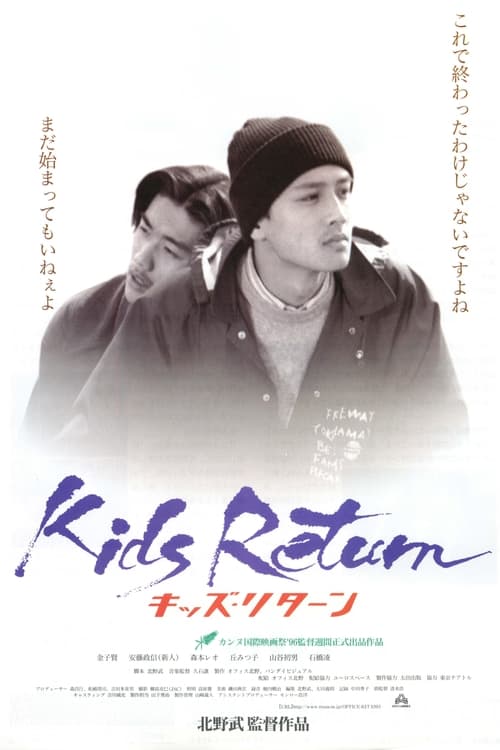
いつもつるんで、学校に行っては問題を起こしていた18歳のマサルとシンジ。ある日、カツアゲした高校生の助っ人にノックアウトされてしまったマサルは、ボクシングに目覚め、ジム通いをはじめる。付き合いでシンジもジムに入門し、ふたりはボクシングの練習に没頭する。ある夜、ヤクザに絡まれたふたりは、若頭に助けられるが、その迫力にマサルは感動する。高校生活も終わり、いつの間にかシンジはボクシング界の逸材に成長していた。だが、ジムにはマサルの姿はなかった……。
これで終わったわけじゃないですよね まだ始まってもいねぇよ
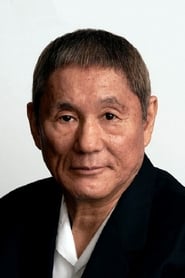
監督
出演者
 プロフィールを見る →
 プロフィールを見る →
 プロフィールを見る →
 プロフィールを見る →
 プロフィールを見る →
AUDIENCE REVIEWS
TMDBユーザーの口コミ
**Summary: 7/10: an unforced, wryly funny meditation on failure, and Kitano's most tender work, arguing that a life spent circling is not the same thing as a life wasted.** Two boys ride one bicycle in slow circles …
**Summary: 7/10: an unforced, wryly funny meditation on failure, and Kitano's most tender work, arguing that a life spent circling is not the same thing as a life wasted.**
Two boys ride one bicycle in slow circles around an empty schoolyard. The film opens on that image and returns to it at the end, and everything between is an argument about whether failure is a destination, or merely weather.
Takeshi Kitano made this film after nearly, accidentally killing himself. In August 1994 he put a scooter into a barrier in Tokyo and spent months recovering. *Kids Return* was the first thing he directed once he could work. Knowing that, the title stops being a title and becomes a question the director is asking himself with a camera: what does it mean to begin again from a position of failure, and is beginning again the same thing as going backward?
The two boys are the answer, split in half. Masaru (Ken Kaneko) is the bully, the ringleader, all swagger and no interior; Shinji (Masanobu Andô) is the follower, softer, more talented, and easier to break. Masaru discovers boxing, gets humiliated, and quits for the yakuza. Shinji stays in the gym and turns out to be good. Their trajectories cross like scissor blades, and Kitano tracks both without ever tipping his hand as to which choice was the wrong one, because neither was, and both were.
The performances are the reason it works. Kaneko and Andô play these two without a shred of movie-teenager varnish; they slouch, mumble, posture badly, laugh at nothing, and inhabit exactly the kind of stupid loyalty that binds sixteen-year-old boys who have nothing else. Andô in particular does something delicate, letting Shinji's confidence arrive and then curdle so gradually that you cannot name the scene where it turned.
And the comedy is not decoration. Kitano was a stand-up before he was anything, and the film keeps cutting away to a pair of aspiring manzai comedians who are, unmistakably, the young Kitano and his partner grinding out sets in Asakusa for nobody. There is a taxi driver, a girl behind a café counter, a salaryman going gray in real time. These vignettes are funny in the flat, unhurried way Kitano is funny, and they are doing structural work: every one of them is another version of the same two kids, ten or twenty years further along the same road, and not one of them has arrived anywhere.
Katsumi Yanagijima shoots it mostly locked-down and frontal, letting people walk into and out of static frames, which gives the whole picture the quality of a photo album somebody is turning pages in. Joe Hisaishi's score is the film's other great asset, a wistful, circling theme that has outlived the movie and become one of the most recognizable pieces of music in Japanese cinema. Kitano's own editing does the thing he does better than almost anyone: he cuts away from the blow. A punch lands off-screen; a beating is implied by a shot of the aftermath. He trusts the ellipsis.
The last exchange, the most quoted lines Kitano ever wrote, goes something like this:
> 「なあ、俺たちもう終わっちゃったのかな?」
>
> 「バカヤロー、まだ始まっちゃいねえよ」
>
> *"Hey, are we finished already?"*
>
> *"Idiot. We haven't even started yet."*
Note that Shinji does not say things *will* improve. *Bakayarō* is rough affection, the insult boys use instead of tenderness, and the reply is delivered in slangy, contracted, working-class Tokyo speech, the register of people who were never going to be asked their opinion about anything. The line refuses optimism and refuses despair with equal firmness. It is Kitano refusing to answer the question the film asks.
This film reminds me of something that took me a long while to learn, and has since served me well. I do not believe there are wrong decisions. What I used to think was a "wrong" decision, I now understand as an opportunity to learn a lesson I evidently needed. Because if I had already learned it, I wouldn't have made that choice in the first place. And when I haven't paid attention, I've found myself repeating the "class" later. Maybe sometimes more than once. I know the objection to this belief: creating a life, taking a life, suicide, none of these are reversible, none of them can be studied afterward. Fair enough. But I believe in the continuity of the soul, and within that framework even those decisions fit my paradigm, albeit extreme lessons.
Which is why Masaru and Shinji circling that schoolyard doesn't read in any way sad to me. They have failed at boxing, at crime, at school, at comedy, at every institution that offered to sort them. What they have not failed at is each other, and they are still enrolled. The bicycle is *not* going nowhere. It is going around again, which is how the lesson gets taught to anyone who wasn't listening the first time.
口コミはTMDBユーザーによる投稿です。ゾクログの見解を示すものではありません。

みんなの一言
まだコメントはありません。最初の一言を投稿しませんか?