





作品紹介
作品情報を準備中です。
監督

出演者
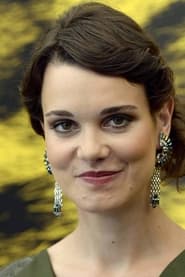 プロフィールを見る →
 プロフィールを見る →
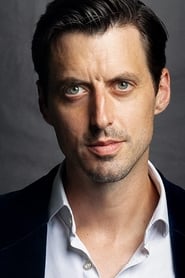 プロフィールを見る →
 プロフィールを見る →
 プロフィールを見る →
AUDIENCE REVIEWS
TMDBユーザーの口コミ
Jane Austen Wrecked My Life captures, with irony, melancholy, and tenderness, the emotional and creative labyrinth of its protagonist, Agathe. At first glance, the film seems to be about a writer facing creative block, b…
Jane Austen Wrecked My Life captures, with irony, melancholy, and tenderness, the emotional and creative labyrinth of its protagonist, Agathe. At first glance, the film seems to be about a writer facing creative block, but it quickly becomes clear that her struggle with writing is only the surface of a deeper internal conflict — one that ties together trauma, memory, and the way literature shapes identity.
The film never explicitly states whether Agathe’s writer’s block began after the car accident that killed her parents, but the emotional link is undeniable. The accident, her father’s literary influence, and the idealized way she was raised around books and intellectual expectations all intertwine to create an invisible weight she carries. Writing, for her, is not just artistic expression — it is also a form of mourning, a dialogue with her father’s ghost, and a way of reestablishing her sense of self in a world that feels chronologically wrong.
Agathe believes she was born in the wrong historical period. Her fascination with Jane Austen’s world is not just aesthetic nostalgia but a form of existential misplacement. Literature has constructed an illusion of love and identity that doesn’t fit the modern age she inhabits. Her romantic and sexual anxieties — her discomfort with dating apps, her fear of one-night stands, her longing for stability — all stem from this collision between her literary ideals and contemporary reality. She is seen as insecure only because she searches for the kind of security her father once gave her. In this sense, she becomes a modern Anne Elliot: the romantic heroine displaced into an age of irony, algorithms, and fleeting affection.
The film’s aesthetic reinforces this temporal duality. What most pleased me was its delicate visual language — the piano she plays as a hobby, the vintage bookshop, the choice of traveling by bike or on foot instead of by plane, the use of vintage cars, and the limited presence of smartphones. These details subtly detach the narrative from modernity, creating a liminal space where past and present coexist. The bilingual cast adds authenticity and depth to this atmosphere, giving the story a cultural texture that feels both local and universal.
I must also say that I laughed out loud in several scenes. For me, the humor worked surprisingly well — and I’m not someone who usually finds French films funny. The comedy emerged from ordinary, realistic situations, the kind of awkward moments anyone might experience in daily life. It wasn’t forced or exaggerated; it was situational, natural, and human.
Psychologically, the film operates on a deeper level. The balance between past and present feels almost Freudian — an Œdipal structure in which Agathe’s literary and emotional attachment to her father becomes a mirror for her difficulty in forming new relationships. Her journey is not only about recovering her creative voice but also about detaching herself from the paternal figure and finding her own authorship, both in writing and in life.
Some critics have pointed out that the film underdevelops its secondary characters, but for me, this is not a flaw. The story is about Agathe’s consciousness, and everyone else exists as a projection or reflection of her internal world. Her independent sister embodies the pragmatic, contemporary woman Agathe cannot quite be. The single mother friend, raising her six-year-old son alone, represents an alternative model of freedom and maternal strength that contrasts with Agathe’s emotional dependency. Felix, the loyal friend, briefly blurs into romantic territory — not out of passion, but out of the mutual tenderness that comes from fearing solitude.
Even the fellow writers at the residency are symbolic extensions of Agathe’s psyche. The blonde British writer personifies intellectual arrogance — the belief that one’s interpretation is the only valid one — while being herself driven by emotional turmoil, undergoing in vitro fertilization and thus embodying the tension between reason and biology. The French writer, in contrast, approaches literature through mysticism and intuition; she is the one who introduces the yin-and-yang reading that helps Agathe understand that creation and identity are processes of balance, not perfection.
Oliver, meanwhile, functions as Agathe’s opposite and complement — her yin to his yang. While she rises in the literary world, he loses prestige as a literature professor at King’s College and returns to his parents’ house to face his father’s illness and his own disillusionment. Their meeting is not merely romantic but transformative: Agathe challenges Oliver’s academic and male-centered reading of literature, influenced by authors like Dickens and Shakespeare, and shows him another way of seeing Austen — one rooted in empathy, vulnerability, and female subjectivity. Through her, he learns to read differently; through him, she learns to live differently.
In the end, Jane Austen Wrecked My Life is not about perfect love, but about the illusions we inherit from literature and how they shape our desires, fears, and sense of belonging. It’s about the human need to reconcile the stories we were told with the lives we are actually living. For me, the film succeeds not because it fulfills the viewer’s expectations of plot or character development, but because it remains true to its own artistic vision. It’s not about what we, as spectators, want from these characters — it’s about what the work itself wants to express: that every act of creation, like every act of love, is a negotiation between illusion and reality, between memory and the presente moment.
口コミはTMDBユーザーによる投稿です。ゾクログの見解を示すものではありません。



みんなの一言
まだコメントはありません。最初の一言を投稿しませんか?